
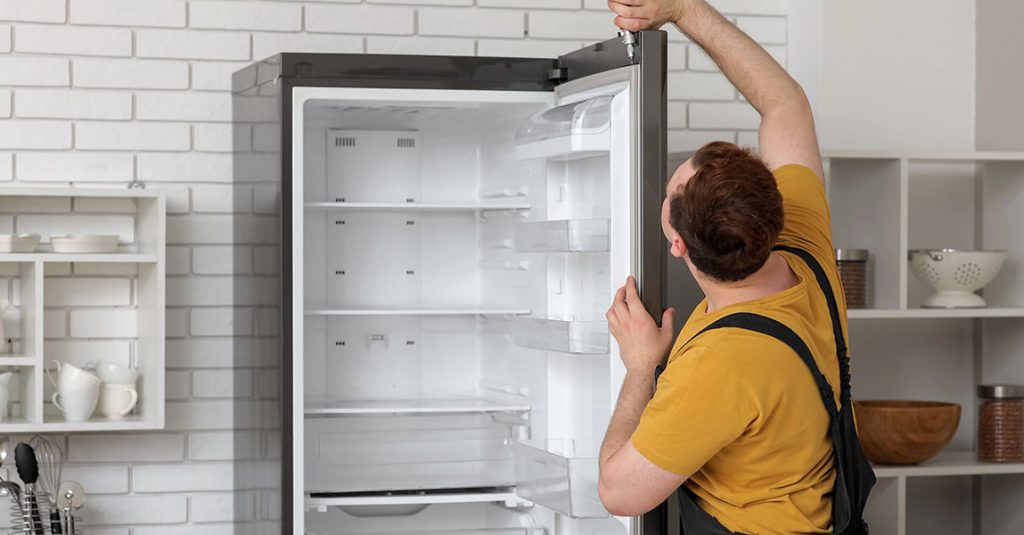
Freezers are meant to hold a steady cold temperature, but sometimes they start losing it without warning. One reason this happens is a stuck defrost heater. When it stays on too long, it warms up the entire compartment and causes food to soften or spoil. That might sound like a rare problem, but it’s actually more common than most think. By understanding how the system works, it becomes easier to catch the issue early and prevent food loss. Let’s break it down clearly and look at what really goes wrong when a defrost heater doesn’t switch off properly.
How a Defrost Heater Works in a Freezer
Every frost-free freezer comes with a built-in heater that turns on for short periods. Its main job is to melt any frost that builds up around the evaporator coils. Normally, this happens every 8 to 12 hours for about 20 to 30 minutes. That timing prevents thick ice from forming while keeping the rest of the freezer cold.
The heater is controlled by a defrost timer or control board, depending on the model. Once the cycle ends, a sensor or thermostat tells the system to turn the heater off and switch back to cooling. However, when that shut-off step fails, the heater just keeps running. As a result, temperatures inside the freezer climb instead of dropping.
When this part malfunctions, you may find ice melting off food or freezer walls feeling warm. In most cases, freezer repair in Leduc becomes necessary to replace the damaged component before further damage occurs.
What Causes the Heater to Stay On
Some heater issues come from failed components while others involve wiring or sensor faults. If the defrost thermostat is stuck closed, it won’t sense rising temperatures and will leave the heater powered. Similarly, if the defrost control board is faulty, it may forget to shut off the cycle entirely.
Wiring problems like shorts or corrosion can also trick the system into running the heater non-stop. That is especially true in older freezers where insulation wears down or connectors loosen. Another possibility is a failed timer that gets stuck in defrost mode.
We often find that people ignore subtle warning signs at first, such as soft spots in frozen goods or water collecting on lower shelves. Once those signs appear, it’s worth inspecting the defrost components or getting help from technicians who handle appliance repair in Leduc.
Signs Your Freezer Heater Is Stuck On
Changes inside the freezer usually offer the first warning. You may notice the internal fan blowing warm air or hear it running longer than usual. Ice that was once solid might turn soft, and water could start pooling near the bottom of the unit.
The back panel near the coils may feel warm to the touch even though the freezer is supposed to be cold. Another sign is that the compressor stays off for long periods because the thermostat senses incorrect warm readings.
We sometimes see food with frost crystals forming, then melting and refreezing. That fluctuation damages texture and increases the risk of spoilage. If your freezer seems to cool sometimes but warm at others, a heater issue may be the reason. You can confirm by testing the defrost thermostat or checking if the heater gets warm during its cycle when it shouldn’t.
How to Test for a Defrost Heater Fault
To confirm that the heater is the issue, unplug the freezer and remove the back panel. This gives access to the evaporator and heating element. Look for burn marks or melted plastic nearby. Use a multimeter to check the resistance across the heater. If the reading is very low or zero, the heater could be shorted and stuck on.
Next, test the defrost thermostat. This part should show continuity only when it’s cold. If it remains closed (shows continuity) at room temperature, it’s likely defective. Also inspect the wires for corrosion, exposed copper, or loose connectors.
A failed defrost control board might not be easy to test directly, but if the other parts are functional, replacing the board is usually the next step. Sometimes the board gets stuck in defrost mode and keeps the heater energized, even when it should return to cooling.
Risks of Letting It Go Unrepaired
Ignoring this issue can lead to spoiled food, higher energy bills, and even damage to other freezer components. The compressor might overwork trying to cool the rising temperature, which could shorten its life. Ice melting and refreezing also causes strain on door seals and makes drawers harder to open.
In some units, constant heater operation can warp plastic liners or damage insulation inside the walls. That leads to more frequent problems down the road. If the freezer sits inside a garage or basement, it may even leak and damage flooring.
Even if the unit still seems to function off and on, intermittent heater issues mean internal sensors could be thrown off permanently. We’ve seen that happen in models that are left running in faulty cycles for too long. When unsure, it’s best to seek local freezer repair solutions to prevent those chain reactions.
Steps We Take to Fix a Stuck Heater
First, we unplug the freezer and remove all rear panels to get full access to the heater and wiring. After testing each part individually, we replace the defective one. This could be the heater itself, the thermostat, or the defrost control board.
After installation, we reconnect the wiring, reassemble the panel, and restart the freezer to watch the next defrost cycle. Once the new part kicks in and shuts off as intended, we monitor the internal temperature for consistency.
Sometimes, we also reset the board or test the fan to ensure full airflow returns to the freezer section. In rare cases, if there’s long-term internal damage, we help decide whether repair or replacement offers a better value. When people need dependable appliance repair in Leduc, we make sure the freezer works safely and correctly before we finish the job.
Extra Tip: Use a Fridge Thermometer to Monitor Behavior
One simple way to keep track of your freezer is to place a fridge thermometer inside. This tool helps catch problems early before food shows signs of thawing. Ideally, the reading should stay below zero degrees Fahrenheit.
If you notice it climbing steadily during random times of the day, a heater issue may be building up again. That’s especially true after a recent part replacement. A consistent temperature reading helps verify that the defrost cycle is ending when it should.
Sometimes, customers assume their freezer has returned to normal after repairs, but small drifts in temperature reveal lingering faults. A basic thermometer from a hardware store gives reliable daily feedback and works better than relying on the digital panel alone.
FAQ
What’s the first sign of a defrost heater stuck on?
Usually, soft or wet food inside the freezer is the first clue. Some people also feel warm spots or notice water buildup near the bottom.
Can I reset the defrost cycle manually?
Yes, but it depends on your model. Some freezers allow a forced defrost reset using control panel buttons. Others require unplugging and restarting the system.
Is a defrost timer the same as a defrost control board?
Not exactly. Older freezers use mechanical timers. Newer models use electronic control boards that manage defrost cycles and other functions.
How long should a defrost cycle last?
Most cycles last between 20 and 30 minutes. Anything longer may point to a stuck heater or broken thermostat.
Should I unplug the freezer if I suspect a heater problem?
Yes, that’s a safe first step. Unplugging the freezer prevents further heating and allows time to inspect or call a technician.