
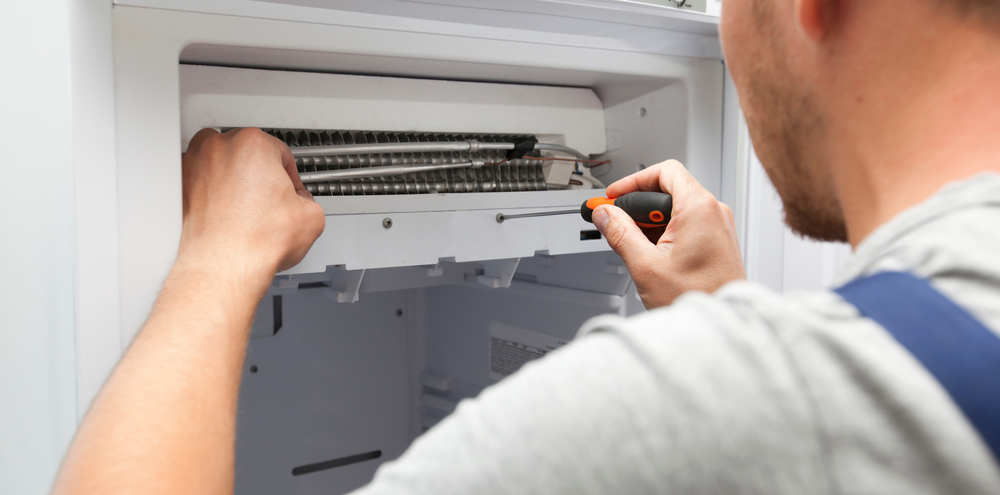
Your freezer used to keep ice cream rock-solid. Now it’s soft. Your frozen vegetables feel mushy. Ice cream melts faster than it should. Something’s wrong, but you’re not sure what. Before you panic or call for service, check these common issues yourself.
Jay Appliances handles freezer repair calls daily. Many customers discover the problem was simple—something they could have fixed in minutes. Other times, professional help is genuinely needed. Let’s walk through both scenarios so you know which applies to your situation.
Check the thermostat setting first. Most freezers have a temperature dial or digital control. If someone accidentally bumped it or changed the setting, your freezer stops reaching proper temperature. Specifically, the freezer should stay at 0°F or below. If your dial reads anywhere above that, turn it colder and wait 24 hours. Therefore, test if this simple adjustment solves your problem before calling Jay Appliances for freezer repair.
Look for frost buildup inside. Excessive frost on walls or food indicates a defrost cycle problem. When frost accumulates too much, airflow gets blocked. Consequently, the freezer can’t circulate cold air properly. Therefore, clear away visible frost and check if a drain plug exists at the bottom. Some freezers have manual defrost cycles. If yours does, run the defrost cycle and see if performance improves.
Inspect door seals carefully. The rubber gasket around the freezer door traps cold air inside. If the seal is cracked, torn, or worn, warm air leaks in constantly. Consequently, the freezer runs harder trying to maintain temperature. Therefore, examine the entire seal around the door. Press on it—does it feel solid or squishy? A failing seal needs replacement. Jay Appliances stocks genuine replacement gaskets for all major freezer brands.
Clean the condenser coils. Dusty coils prevent proper heat transfer. Your freezer’s condenser coils are usually located behind or underneath the unit. Over months, dust, pet hair, and lint accumulate there. Consequently, the freezer can’t expel heat efficiently. Therefore, unplug the freezer, locate the coils, and vacuum away debris carefully. Use a coil cleaning brush for stubborn buildup. Then plug it back in and test performance after a few hours.
Check airflow vents. Inside your freezer, vents direct cold air from the compressor to the compartment. Food or ice can block these vents. Consequently, cold air doesn’t reach all areas properly. Therefore, inspect vents for blockages. Move items away from vents. Allow at least three inches of clearance so air circulates freely.
Verify the freezer isn’t overstuffed. Cramming too much food inside blocks airflow. Cold air needs space to move. Therefore, if your freezer is packed solid, remove some items temporarily. Give the freezer breathing room. Then monitor temperature for 24 hours. Often, this simple step restores proper cooling.
Listen for compressor sounds. When you open your freezer door, you should hear the compressor humming. If it’s completely silent, the compressor might have failed. This requires professional diagnosis. Call Jay Appliances immediately if the compressor won’t start. Our technicians carry diagnostic equipment to test the compressor quickly.
Feel the back wall temperature. The back wall of your freezer should feel cold to the touch. If it’s warm, the refrigerant system isn’t working properly. This indicates a serious problem requiring professional attention. Don’t wait on this—contact Jay Appliances for fridge repair assessment since refrigerant issues affect both units.
Check for water pooling. Water accumulating inside your freezer signals a clogged defrost drain. Most freezers have a small drain hole at the bottom that lets meltwater escape. If this drains clogs, water backs up inside. Therefore, locate the drain and flush it with warm water using a turkey baster or small syringe. This usually clears blockages caused by food debris or ice.
Test before assuming failure. Give your freezer at least 24 hours after making adjustments before deciding it’s broken. Temperature changes take time. Cold air needs to build back up inside. Furthermore, some issues only show up over hours, not minutes. Therefore, patience prevents unnecessary repair calls.
When basic troubleshooting doesn’t work, Jay Appliances steps in. We handle dishwasher repair and every kitchen appliance. Our technicians diagnose freezer problems accurately using professional equipment. We test compressors, check refrigerant pressure, and inspect electrical connections. Subsequently, we explain what’s wrong and present your options clearly.
Summer heat stresses freezers harder. During hot months, your freezer works overtime. Therefore, problems become more obvious now. If your freezer struggles in summer heat, it likely has an underlying issue. Address it before temperatures drop and the problem disappears temporarily.
Preventative maintenance matters. Clean condenser coils quarterly. Check door seals monthly. Keep the area around your freezer clear so air can circulate. These steps prevent most freezer problems. Therefore, you avoid emergency repair calls.
Jay Appliances provides dryer repair and freezer service to homes across Leduc. We also handle oven repair and every other appliance. Call today if your freezer isn’t staying cold. We’ll diagnose the problem and get your frozen foods back to safe temperatures this week.
5 FAQs
How long does it take for a freezer to reach proper temperature?
A newly set freezer takes 2-4 hours to reach 0°F. Allow 24 hours for the full compartment to stabilize. If it’s still warm after a day, something needs professional attention.
Can I repair a freezer door seal myself?
Yes. Order a replacement gasket for your model and follow the instructions. Jay Appliances can help you find the right part and guide you through installation if needed.
What temperature should my freezer be?
Your freezer should maintain 0°F or colder. Check it with a freezer thermometer, not by feel. Ice cream should be hard, not soft or melting.
How often should I clean freezer coils?
Clean condenser coils quarterly, or more frequently if you have pets. Dust buildup is the most common reason freezers lose cooling power.
Is a warm freezer dangerous?
Yes. Frozen food in a warm freezer can thaw, allowing bacteria growth. If food has been above 40°F for more than two hours, throw it out for food safety.