
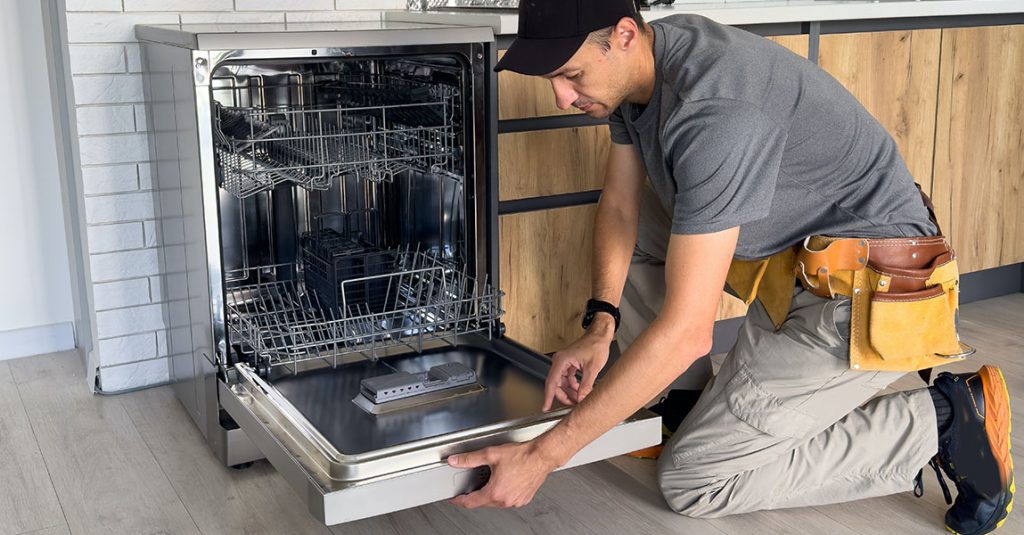
Dishwashers usually run quietly, so when they begin to make loud grinding noises, something is wrong. These sounds often point to wear inside the circulation pump, especially at the bearing. Over time, the motor shaft can wear down the bearing surface, and the result is vibration and noise during the wash cycle. We deal with this issue often, and it tends to worsen until the pump fails completely. Therefore, understanding the cause and options for fixing it helps homeowners act before the damage spreads.
Understanding the Circulation Pump’s Role
Every dishwasher depends on its circulation pump to push water through spray arms and filters. During a normal cycle, water flows quickly and quietly. However, if the bearing inside the pump begins to wear, the shaft starts wobbling. That movement creates a grinding sound, especially when the motor starts or ramps up.
In most models, the bearing is part of a sealed pump assembly. Because of this design, replacing the bearing alone usually isn’t possible. Instead, we must replace the entire motor-pump unit. If left alone, this wobble can cause seals to fail and let water into the motor housing. That risk turns a noisy dishwasher into a leaking one.
Often, early signs include a slightly louder hum or a change in pitch. In some cases, grinding only happens during part of the cycle, when water is at full pressure. These signs show up before any leaks or full shutdowns occur. At that point, a technician can test the unit and inspect pump performance.
For anyone unsure about the condition of their pump, scheduling appliance repair in Leduc helps avoid unexpected failures during heavy use.
What Causes the Bearing to Wear Down
Several factors increase stress on circulation pump bearings. Age is the most common reason, as water and vibration eventually break down lubricants or surfaces. However, blockages inside the system also make the motor work harder. Debris like glass slivers or food particles can restrict flow and put more pressure on the pump.
In addition, hard water buildup affects internal components. Scale deposits change water flow and cause friction on the pump’s shaft. We sometimes find dishwasher systems that sound fine when empty but grind when loaded, due to added resistance.
Running regular cleaning cycles and checking for clogs helps, but bearing wear still builds over time. That’s why we recommend maintenance if any change in sound appears. Most importantly, ignoring the noise risks a full breakdown and possibly internal flooding.
As with most dishwasher problems, early action limits damage and cost. That’s especially true if you rely on the unit daily or have a large household.
How to Confirm It’s the Pump Bearing
When a dishwasher starts making grinding noises, we always begin with a sound test. Listening carefully during startup, wash, and drain phases gives us important clues. The key is pinpointing when the noise begins and what changes it.
If the grinding only occurs during water circulation but not during draining, the circulation pump is the likely source. To confirm, we open the lower access panel and run a short cycle while watching the motor. Sometimes, a stethoscope or sound amplifier helps locate the exact vibration point.
Next, we remove the filter and check for foreign objects. A stuck seed or small bone can create harsh noise, but once cleared, the unit runs quiet again. However, if the noise continues, and the pump sounds uneven or slow, bearing wear is likely.
In most cases, we remove the circulation pump assembly to check shaft play. Excess movement confirms that the bearing is loose. Once we reach that stage, it becomes a matter of deciding on repair or replacement.
Many models use sealed units, so we usually replace the entire pump module. For parts availability and compatibility, it’s best to speak with a technician who handles dishwasher repair in Leduc.
Why Acting Early Saves Time and Cost
Waiting too long to address a grinding sound can lead to extra repairs. If the bearing wears too far, the shaft may bend or overheat. This often burns out the motor windings and damages surrounding components. At that point, repair costs rise sharply.
Moreover, a failing pump affects water pressure, which reduces cleaning performance. Dishes may come out dirty or still wet. This leads to repeat cycles and wasted electricity. We’ve seen cases where small noises lead to much bigger problems because the early warning signs were ignored.
Replacing the pump early means avoiding extra parts and labor. Most service calls take less than an hour if we catch the problem before it spreads. The longer it runs with a damaged bearing, the more complex the fix becomes.
For those who want to know their options before things get worse, we suggest contacting a technician through appliance repair experts in your area. It’s the simplest way to keep your dishwasher working reliably.
What You Can Do Before Calling a Technician
If your dishwasher starts grinding, there are a few safe steps to take before booking service. First, remove the bottom filter and rinse it under warm water. Then inspect the drain area for any trapped debris. Small items often get stuck and cause strange noises.
Next, check the spray arms for clogs or cracks. Spinning them by hand should feel smooth. If they drag or squeak, remove and rinse them. Also, check that the dishwasher isn’t overfilled with detergent or rinse aid. Sometimes, excess suds can cause odd noises when moving water.
You can also run an empty cycle with a cleaning solution made for dishwashers. This helps remove buildup and improves flow. If the noise disappears after cleaning, the issue was likely minor. However, if grinding continues, the problem is likely mechanical.
Avoid opening the unit’s motor housing unless you have experience. Internal repairs involve electrical testing and sealed parts, which require tools and proper safety steps. In many cases, our team can handle diagnosis and repairs with just one visit.
When you’re ready, reach out for trusted appliance repair in Leduc and we’ll walk you through your options with no pressure.
Common Signs It’s Time to Replace the Pump
Several indicators point to an urgent need for circulation pump replacement. Grinding during the wash cycle is one, but there are others worth watching for:
- Dishes come out dirty even after long cycles
- Spray arms stop spinning or barely move
- A burnt smell or heat under the dishwasher
- Visible leaks under the motor housing
- A loud hum that stays constant throughout
Each of these signs may seem minor alone. However, together they show that the motor is struggling. In these cases, performance drops quickly. We often advise replacement as soon as two or more signs appear together.
By paying attention early, you avoid surprise failures or sudden leaks. We’ve helped many households keep their dishwashers running smoothly just by replacing one key part before damage spreads.
FAQ
Why does my dishwasher sound like it’s grinding rocks?
This sound often comes from a worn circulation pump bearing. It creates vibration and rough noise as the motor runs.
Can I just oil the pump or bearing to fix it?
No. Most pumps are sealed and can’t be oiled. If the bearing wears out, the pump usually needs replacement.
How much does it cost to replace a dishwasher circulation pump?
It depends on the model, but most replacements fall between $150 and $350 including labor.
Is it safe to keep running the dishwasher if it grinds?
It’s not safe. Continued use may lead to leaks or motor failure, which adds cost and risk.
How long do dishwasher pumps usually last?
With normal use, circulation pumps typically last 6 to 10 years before wear starts to show.