Your dishwasher runs every few days. It cleans dishes, saves water, and simplifies kitchen life. But most people ignore it between cycles. They load dishes, add detergent, and hit start. That’s a mistake. Regular maintenance prevents expensive problems later.
Jay Appliances sees preventable dishwasher failures constantly. Customers call with issues that simple cleaning steps could have prevented. The good news? You can avoid those calls. Spend five minutes monthly and save hundreds on repairs.
Clean the filter regularly. Your dishwasher has a fine mesh filter that traps food particles. Over time, debris builds up and blocks water flow. Consequently, dishes don’t get clean and the machine works harder. Furthermore, excess strain damages the pump. Jay Appliances recommends removing and rinsing the filter after every 2-3 loads. It takes ninety seconds. Specifically, you’ll notice cleaner dishes and better drainage.
Run the garbage disposal first. Before loading your dishwasher, run the sink’s garbage disposal. This removes large food bits from pipes. Therefore, less debris reaches your machine’s internal drain. The result? Fewer clogs and longer equipment life. Jay Appliances technicians confirm this simple step reduces service calls significantly.
Check spray arms monthly. Inside your dishwasher, rotating spray arms distribute water across dishes. Food particles or mineral deposits clog the spray holes. Consequently, water can’t spray properly and cleaning suffers. Once a month, remove the spray arms and inspect the tiny holes. Clear any blockages with a toothpick or pipe cleaner. Then run dishwasher repair diagnostics if performance improves noticeably.
Wipe door seals clean. The rubber gasket around the door traps moisture and food bits. Over months, mold and mildew grow inside the seal. This causes odors and leaks. Additionally, a compromised seal lets water escape during cycles. Jay Appliances suggests wiping the seal with a damp cloth monthly. Use a soft brush to clean grooves. Therefore, you prevent mold growth and water damage.
Use the rinse aid feature. Hard water spots ruin dishes and can damage internal components over time. Rinse aid reduces spotting and mineral buildup. Consequently, your machine runs cleaner and lasts longer. Jay Appliances recommends filling the rinse aid dispenser every three to four months. It costs little but protects your investment significantly.
Run a cleaning cycle monthly. Place a dishwasher cleaner tablet in an empty machine and run it on hot wash. This removes mineral deposits, grease, and odor-causing bacteria. Furthermore, it keeps internal passages clear. Therefore, your dishwasher runs more efficiently. Run this cycle once monthly without fail.
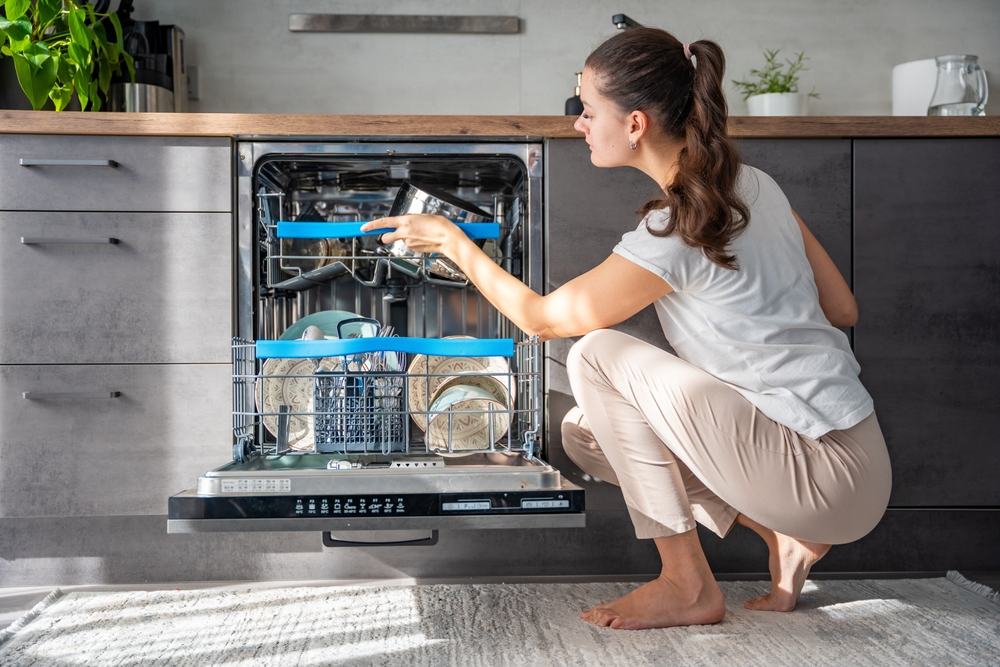
Load dishes properly. How you load dishes affects machine performance. Overloading blocks spray arms and traps food debris. Therefore, dishes don’t get clean and the machine has to work harder. Jay Appliances recommends leaving space between items. Allow water to circulate freely. Specifically, place heavily soiled dishes in the bottom rack where water pressure is strongest.
Check the drain hose for kinks. The hose that drains dirty water should run straight without bends or kinks. Kinks trap water and food particles inside the line. Consequently, clogs develop quickly. Every three months, inspect the drain hose behind your dishwasher. Smooth out any kinks. Therefore, water drains freely and washer repair problems won’t spread to other appliances.
Descale regularly in hard water areas. Alberta’s water is often hard with mineral content. These minerals accumulate inside passages and heating elements. Over time, buildup reduces efficiency and damages components. Jay Appliances recommends running a commercial descaler tablet quarterly if you have hard water. This keeps your machine running smoothly and prevents costly repairs.
Know when to call professionals. Some problems need expert attention. Leaks, strange noises, and failure to drain signal internal damage. Don’t ignore these warning signs. Call Jay Appliances immediately. Early intervention stops small problems from becoming expensive fridge repair or machine replacement situations.
Compare the cost of prevention. Descaler tablets cost dollars. Maintenance supplies cost pennies. Professional repairs cost hundreds. New dishwashers cost thousands. Therefore, spending twenty dollars annually on maintenance prevents thousand-dollar disasters. It’s the smartest investment you’ll make for your kitchen.
Jay Appliances handles all major brands and models. Our technicians diagnose problems accurately. We carry genuine parts and warranty every repair. Most customers skip maintenance until something breaks. Smart homeowners prevent problems before they start.
Maintenance keeps your dishwasher running strong for years. Follow these steps and your machine will serve faithfully. When you need dryer repair or any appliance service, Jay Appliances is ready. We also handle oven repair and every other kitchen appliance. Call today with questions. We’ll guide you toward the best maintenance practices for your specific machine.
5 FAQs
How often should I clean the dishwasher filter?
Clean the filter after every 2-3 loads. Remove it, rinse away debris, and reinstall. This simple step keeps water flowing freely and prevents clogs that damage the pump.
Can hard water damage my dishwasher?
Yes. Mineral deposits build up inside passages and reduce efficiency. Jay Appliances recommends running a descaler tablet quarterly if you have hard water in Leduc.
What causes dishwasher odors?
Food debris trapped in seals, drains, and filters causes smells. Monthly cleaning of the seal and a descaler cycle eliminate odors naturally without chemicals.
Is rinse aid necessary?
Rinse aid prevents spotting and mineral buildup. While optional, Jay Appliances recommends it for hard water areas because it extends equipment life significantly.
When should I call a repair specialist?
Call Jay Appliances if you notice leaks, strange noises, or failure to drain. Don’t wait for problems to worsen. Early professional intervention saves money long-term.