
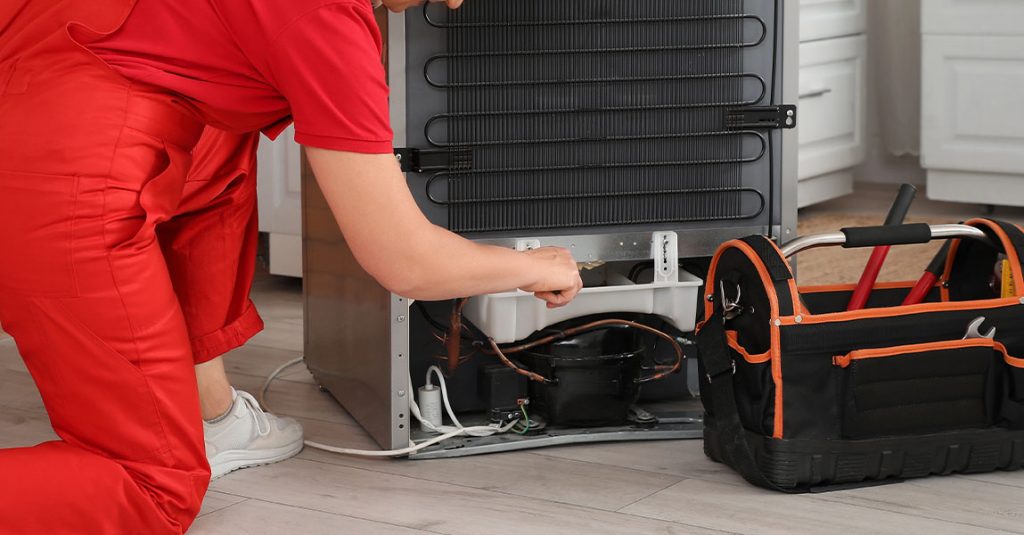
Fridge fans that run non-stop often point to a deeper issue inside the defrost system. This is not something most people notice right away. At first, the fan noise may seem normal, but if it keeps going long after the fridge door closes, something isn’t working as it should. When the defrost cycle fails, cold air flow gets disrupted, and that causes more than just noise. It can create uneven temperatures and higher energy bills. Understanding why this happens helps avoid bigger problems later.
How the Defrost System Should Work
During normal operation, a fridge defrosts itself several times a day. It melts the frost buildup on the evaporator coils using a heating element. This process usually happens quietly, and we rarely notice it. After that short cycle, the system returns to cooling mode, and the fans cycle off and on as needed.
If the defrost system fails to cycle properly, ice can build up and block airflow. That forces the fans to work continuously in an effort to maintain the set temperature. The system never gets a chance to rest, and over time, that adds stress to all the internal parts.
We often handle calls where customers ask why their fridge keeps running loudly. In many of these cases, testing reveals a defrost timing issue. For more on diagnosing this kind of issue, take a look at our fridge repair services in Leduc to understand how we approach these types of problems.
Recognizing the Signs of a Stuck Defrost Cycle
Some fridges show early signs before things get worse. For instance, frost may form on the back panel inside the freezer. That’s usually a red flag. Another clue is water pooling under the crisper drawers. That happens when melted frost doesn’t drain properly. Over time, food stored near vents may start freezing, while items in the main compartment stay warmer than expected.
Unusual clicking sounds, or a fan that runs all the time without pause, are more clear warnings. If your fridge never goes quiet, especially during the night when no one opens the door, something isn’t cycling the way it should. Some models even stop cooling altogether when too much frost blocks airflow.
A small part like a defrost thermostat or timer often causes this. In newer units, control boards take over that job, and if they fail, the timing goes off completely. If you’re hearing constant fan noise and dealing with temperature issues, the root cause is likely a defrost system that’s not resetting.
Common Causes Behind the Constant Fan Operation
We usually start by testing three parts: the defrost thermostat, the defrost heater, and the timer or control board. If any one of these fails, the defrost system stops cycling. That means the evaporator coils stay frozen, blocking airflow and keeping the fan stuck on.
In older models, the mechanical defrost timer sometimes gets stuck in one position. When that happens, the system never enters or exits defrost mode. Meanwhile, electronic models use sensors and control boards. If the defrost sensor reads incorrect temperatures, the system won’t trigger the heater.
When we check these parts, we also inspect the wiring. Sometimes, loose connections or damaged terminals cause the parts to miscommunicate. In rare cases, the problem stems from a clogged or frozen drain line that causes the system to back up. Even though the fan keeps running, the coils stay cold and blocked with ice.
You can learn more about how we diagnose and solve these issues by visiting the appliance repair in Leduc service overview. It outlines how our process tackles both mechanical and digital control failures step by step.
Why Constant Fan Use Creates Bigger Problems
If a fridge fan runs nonstop for too long, it wears down faster. More importantly, the appliance starts wasting energy. Fans are designed to run in short bursts. When they run constantly, they push air through areas where it no longer circulates effectively. The fridge works harder, but it doesn’t cool properly.
That leads to food spoiling quicker, or ice forming in unwanted spots. In addition, the longer the coils stay frozen, the harder it becomes for the system to recover. At that point, a quick fix may not be enough. We often see homeowners unplug the fridge to force a manual reset, which melts the ice but doesn’t solve the cause.
Over time, this kind of issue strains the compressor and increases utility costs. That’s why early detection is important. If caught soon, replacing a small part can prevent a major failure later. If you notice the fridge running loudly day and night, it’s best to take action before it becomes a full breakdown.
How to Troubleshoot the Defrost System at Home
Start by checking the back wall inside the freezer. If it’s frosted over, that usually confirms a defrost issue. Next, unplug the fridge and let it defrost for several hours. Once it’s dry, plug it back in and listen. If the fan stops and restarts normally, that gives you a short break before the issue returns.
After that, try turning the defrost timer (if accessible). Use a flat screwdriver to rotate it slowly until you hear a click. That should start the defrost cycle manually. If nothing happens, the timer is likely faulty. For digital models, this process involves using diagnostic mode, which is usually done with a button sequence on the display.
Most homeowners don’t have the tools to check each component fully, especially the control board or heater wiring. That’s where a professional comes in. Still, this basic test can give you a better idea of what’s wrong before calling for help. For expert help, use our contact form to schedule a service and get a detailed diagnosis.
What We Check During a Defrost System Repair
When we arrive, we first unplug the fridge and test for power at the heater terminals. That tells us if the control side is sending the right signal. If the heater has continuity but never turns on, we test the defrost thermostat. That part opens and closes based on temperature, so if it stays open when cold, the heater can’t activate.
If both parts seem to work, we turn to the control board. Using test points or diagnostic mode, we look for signs that the board is stuck or not cycling properly. In cases where the defrost sensor sends bad readings, the board may assume the coils are warm when they’re still frozen.
We also check for blocked vents, bad seals, or air leaks that may confuse the temperature sensors. A complete defrost system repair often includes replacing more than one part. Once the system works again, the fan returns to cycling mode, and the fridge runs quieter and more efficiently.
Simple Ways to Prevent Future Defrost Issues
Keeping the freezer section clear helps air circulate properly. Avoid overpacking, especially around vents near the back. That way, cold air reaches all parts evenly. Also, make sure the door seals are clean and close tightly. If warm air enters the fridge regularly, it forces the unit to cool longer, which adds stress to the defrost system.
Set the temperature between 3 and 4 degrees Celsius for the fridge and around minus 18 for the freezer. This helps keep the compressor and fans from working overtime. Cleaning the coils behind or underneath the fridge every few months also improves performance. Dust and pet hair block airflow and can lead to overheating.
Use a fridge thermometer to monitor internal temperatures. That helps you notice changes before food goes bad. These habits lower the chances of your system failing again, especially after a successful repair.
FAQ
Why does my fridge fan keep running when the door is closed?
It often means the defrost cycle is not turning off properly, causing cold airflow issues that force the fan to run nonstop.
How do I know if the defrost system is the problem?
Look for frost buildup on the back panel of the freezer, water under drawers, or warm spots in the fridge despite loud fan noise.
Can I fix a defrost issue myself?
You can try basic steps like unplugging the fridge to defrost it manually. However, testing parts like thermostats and boards usually needs tools and experience.
Is a constantly running fan dangerous?
While not immediately harmful, it causes faster wear, higher energy use, and eventually leads to compressor damage or cooling loss.
When should I call for help with this issue?
If the fan runs day and night and food starts spoiling or freezing unevenly, reach out quickly before it turns into a more expensive repair.